

Shop Now
- Welding Consumables
- Welding Torches & Torch Spares
- Welding Machines
- Plasma & Cutting Machines
- Welding Machine Spare Parts & Accessories
- Welding Fume Extraction Equipment
- Gas Welding Equipment
- Welding Abrasives
-
Welding Safety Gear
- Welding Helmets
-
Welding Helmet Spares
- Speedglas Spares
- 3M Spares
- Betaweld Spares
- Cigweld Spare Parts & Accessories
- Flip Front Helmet Spares
- Jackson Spares & Accessories
- Lincoln Electric Spare Parts & Accessories
- Miller Spares & Accessories
- RPB Spares
- Servore Spares
- Unimig Spare Parts & Accessories
- Weldclass Spares & Accessories
- Miscellaneous Helmet Lens
- Welding Gloves
- Protective Workwear
- Welding Blankets
- Welding Screens & Curtains
- Ear Protection
- Eye Protection
- Face Protection
- Hand Protection
- Head Protection
- Respiratory Protection
- Sun Protection
- Hydration Products
- Fire Blankets
- Prestart Books
- Safety Signage
- Safety Tags
- Hazard Tape
- Welding Accessories
- Pipe Welding Equipment
-
Cutting & Drilling
- Bandsaws
- Bandsaw Blades
- Bandsaw Accessories
- Coldsaws
- Core Drills & Accessories
- Cutting & Milling Blades
- Diamond Blades
- Drill Bits
- Holesaws
- Magnetic Base Drills
- Metal Working Lubricants
- Pipe Bevelling
- Pipe Cutting Equipment
- Pipe Tee Pulling Kits
- Pipe Threading Machines
- Plasma Table Water Additives
- Punching Machines
- Welding Merchandise
- Gift Cards
- Clearances
-
Hire
- Hire Equipment
- Hire Heating Equipment
- Hire Degausing Equipment
- Hire Welding Automation
- Hire a Welding Positioner
- Hire a Turning Roller
- Hire a Diesel Welder
- Hire a Wirefeeder
- Hire a Multi-Process Welder
- Hire Accessories
- Hire a MIG Welder
- Hire a TIG Welder
- Hire a Stick Welder
- Hire a Plasma Cutter
- Hire a Weld Cleaner
- Hire a Stud Welder
Can You Weld Stainless Steel to Mild Steel?
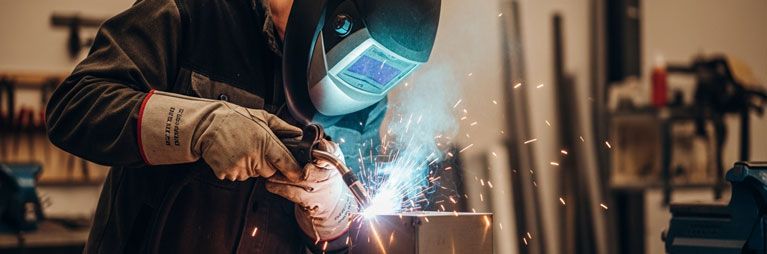
Yes - welding stainless steel to mild steel involves managing thermal expansion differences and selecting the right filler materials to prevent weak spots.
This guide outlines techniques and bonding methods for creating strong, corrosion-resistant welds. Follow along to confidently tackle mild steel welding alongside stainless steel.
The Challenge of Joining Different Metals
Understanding the Materials
Stainless steel and mild steel have distinct properties. Mild steel is mostly iron with hints of carbon, while stainless steel contains chromium (at least 10.5%) for corrosion resistance. These differences complicate their joining process.
Thermal Expansion Challenges
A major hurdle is their thermal expansion rate differences. Stainless steel expands and contracts about 50% more than mild steel with temperature changes, causing stress in the weld that can lead to cracking or warping.
Best Practices for Successful Welds
Selecting Best Filler Materials
Choosing the right filler is crucial:
-
309L stainless steel filler: Best for joining stainless to carbon steels.
-
312 stainless steel filler: Suitable for higher-strength applications.
-
308L stainless steel filler: Works in some cases but isn't ideal.
The right filler forms a buffer zone, accommodating both metals' properties.
Proper Welding Techniques
TIG Welding Method
TIG welding offers precision:
-
Clean metal surfaces thoroughly.
-
Use DC straight polarity.
-
Employ argon as shielding gas.
-
Limit heat to reduce warping.
-
Opt for short, controlled passes.
MIG Welding Method
MIG welding offers speed:
-
Use a tri-mix gas (helium, argon, CO²).
-
Set wire speed lower than for mild steel.
-
Utilise pulse settings to minimise heat input.
-
Maintain a slightly longer stick-out.
Preventing Common Problems
Avoiding Corrosion Issues
Joining stainless and mild steel can cause galvanic corrosion. To prevent it:
-
Use post-weld treatments.
-
Coat mild steel with zinc-rich paint.
-
Keep the weld area clean and dry.
-
Seal outdoor joints appropriately.
Managing Distortion
Different thermal expansion rates can cause distortion. Use these strategies:
-
Firmly clamp pieces.
-
Apply strategic tack welds.
-
Employ a staggered sequence.
-
Allow cooling between passes.
-
Consider back-stepping techniques.
Real-World Applications
Welding stainless to mild steel is prevalent in:
-
Food processing equipment
-
Chemical storage tanks
-
Automotive exhaust systems
-
Structural supports
-
Kitchen appliances
Adjust welding parameters and filler materials based on the application.
Tools and Equipment Needed
For successful bonding, you'll need:
-
A quality TIG or MIG welder with pulse capability
-
Proper shielding gases
-
Stainless steel wire brushes
-
Appropriate filler rods
-
Acetone or alcohol for cleaning
-
Heat sinks to control thermal transfer
Final Tips for Success
-
Test weld on scrap first.
-
Maintain a low heat input.
-
Clean surfaces thoroughly.
-
Consider the finished piece's environment.
-
Test welds for critical applications.
With the right approach, welding stainless steel to mild steel yields strong, reliable joints across various applications.
If you would like to know more or need professional advice, the experts at Alphaweld are here and ready to assist. Contact us or visit us in-store today.
Like to learn more? For further insights on welding stainless steel to mild steel, explore these discussions on Reddit, Miller Welds forums, or Garage Journal.