

Shop Now
- Welding Consumables
- Welding Torches & Torch Spares
- Welding Machines
- Plasma & Cutting Machines
- Welding Machine Spare Parts & Accessories
- Welding Fume Extraction Equipment
- Gas Welding Equipment
- Welding Abrasives
-
Welding Safety Gear
- Welding Helmets
-
Welding Helmet Spares
- Speedglas Spares
- 3M Spares
- Betaweld Spares
- Cigweld Spare Parts & Accessories
- Flip Front Helmet Spares
- Jackson Spares & Accessories
- Lincoln Electric Spare Parts & Accessories
- Miller Spares & Accessories
- RPB Spares
- Servore Spares
- Unimig Spare Parts & Accessories
- Weldclass Spares & Accessories
- Miscellaneous Helmet Lens
- Welding Gloves
- Protective Workwear
- Welding Blankets
- Welding Screens & Curtains
- Ear Protection
- Eye Protection
- Face Protection
- Hand Protection
- Head Protection
- Respiratory Protection
- Sun Protection
- Hydration Products
- Fire Blankets
- Prestart Books
- Safety Signage
- Safety Tags
- Hazard Tape
- Welding Accessories
- Pipe Welding Equipment
-
Cutting & Drilling
- Bandsaws
- Bandsaw Blades
- Bandsaw Accessories
- Coldsaws
- Core Drills & Accessories
- Cutting & Milling Blades
- Diamond Blades
- Drill Bits
- Holesaws
- Magnetic Base Drills
- Metal Working Lubricants
- Pipe Bevelling
- Pipe Cutting Equipment
- Pipe Tee Pulling Kits
- Pipe Threading Machines
- Plasma Table Water Additives
- Punching Machines
- Welding Merchandise
- Gift Cards
- Clearances
-
Hire
- Hire Equipment
- Hire Heating Equipment
- Hire Degausing Equipment
- Hire Welding Automation
- Hire a Welding Positioner
- Hire a Turning Roller
- Hire a Diesel Welder
- Hire a Wirefeeder
- Hire a Multi-Process Welder
- Hire Accessories
- Hire a MIG Welder
- Hire a TIG Welder
- Hire a Stick Welder
- Hire a Plasma Cutter
- Hire a Weld Cleaner
- Hire a Stud Welder
MIG vs STICK Welding: The Ultimate Welding Comparison
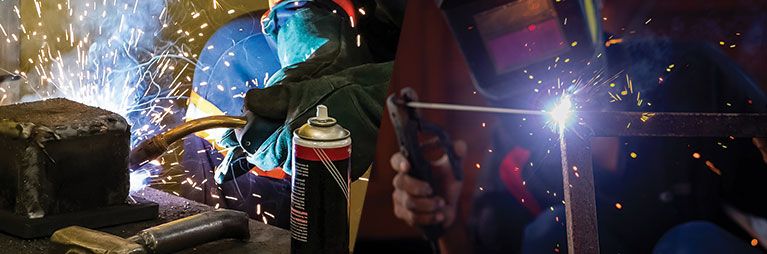
When it comes to choosing between MIG and STICK welding, understanding the fundamental differences and advantages of each technique is essential for welders at any skill level. MIG welding, known for its ease and versatility, offers a swift, clean process that appeals to beginners and professionals alike. In contrast, STICK welding provides robustness and flexibility, making it a preferred choice for outdoor settings and thicker materials.
This welding comparison will delve into the strengths and potential drawbacks of both methods, helping you make an informed decision on the best approach for your projects. Whether you're a DIY enthusiast or a seasoned construction professional, knowing the right technique can enhance your welding experience significantly.
MIG Welding Advantages
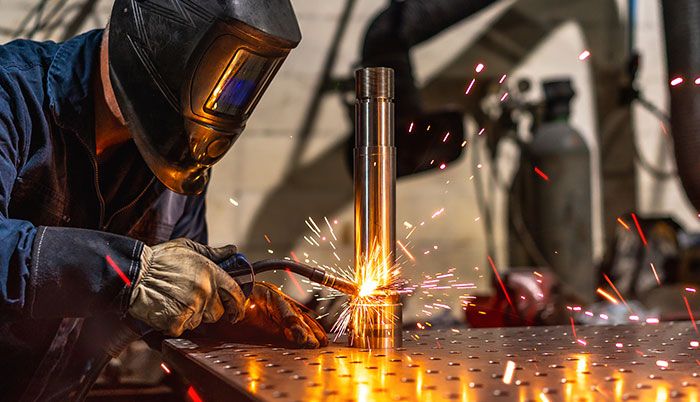
MIG welding, short for Metal Inert Gas Welding, offers several benefits that make it a popular choice for both novice and experienced welders. Let's explore the key advantages of this welding technique.
Ease of Use for Beginners
MIG welding is often referred to as the "hot glue gun" of welding due to its straightforward operation. This makes it an ideal starting point for those new to welding.
The process involves a continuous wire feed, which simplifies the task of maintaining a consistent arc. Beginners can focus on their technique without worrying about frequent electrode changes.
MIG welders also offer adjustable settings, allowing users to fine-tune their approach as they gain experience. This flexibility makes it easier for newcomers to achieve satisfactory results early on.
According to a survey on Reddit, many hobbyists prefer MIG welding for its user-friendly nature and quick learning curve.
Speed and Efficiency
MIG welding stands out for its rapid welding speeds, making it a go-to choice for high-volume production environments.
The continuous wire feed eliminates the need for frequent stops to change electrodes, as is necessary with STICK welding. This feature alone can significantly reduce project completion times.
MIG welding also produces less slag, minimising post-weld cleanup. This efficiency translates to increased productivity and lower labor costs in industrial settings.
Clean and Smooth Finishes
One of the hallmarks of MIG welding is the clean, aesthetically pleasing welds it produces.
The process creates minimal spatter, resulting in smoother welds that often require little to no grinding or finishing work. This characteristic is particularly valuable in applications where weld appearance is crucial.
MIG welding's clean finish makes it the preferred choice for automotive work, furniture making, and other projects where visual appeal is important.
STICK Welding Advantages
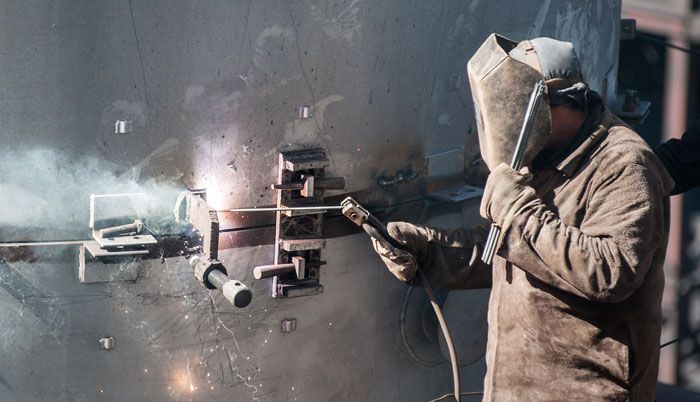
STICK welding, also known as Shielded Metal Arc Welding (SMAW), has its own set of advantages that make it indispensable in certain welding scenarios. Let's examine the benefits of this time-tested technique.
Versatility Across Conditions
STICK welding shines in its ability to perform well in various environmental conditions, making it a versatile choice for outdoor and challenging work environments.
This welding method is less affected by wind and drafts compared to MIG welding, allowing for successful welds even in less-than-ideal conditions. This makes STICK welding particularly useful for construction sites and outdoor repairs.
STICK welding can also handle dirty or rusty metals more effectively than MIG welding, reducing the need for extensive surface preparation in some cases.
Equipment and Cost Benefits
STICK welding equipment is generally simpler and more portable than MIG setups, offering cost and mobility advantages.
The basic equipment for STICK welding is less expensive to purchase and maintain, making it an attractive option for those on a budget or for occasional use.
STICK welders are also more robust and can withstand rough handling, making them suitable for construction sites and field work where equipment durability is crucial.
Strong Bonding Capabilities
STICK welding is renowned for its ability to create strong, deep penetration welds, particularly on thicker materials.
This welding technique excels in joining a wide range of metals, including steel, cast iron, and stainless steel. Its versatility in material compatibility makes it a go-to choice for many industrial applications.
The deep penetration achieved with STICK welding results in robust joints that can withstand high stress and harsh conditions, making it ideal for structural welding and heavy equipment repair.
Comparing Welding Techniques
Understanding the strengths and limitations of both MIG and STICK welding is crucial for selecting the right technique for your specific project. Let's compare these methods in practical terms.
MIG vs STICK: Practical Applications
MIG and STICK welding each have their ideal use cases, determined by factors such as material type, thickness, and working environment.
MIG welding excels in:
-
Thin to medium-thickness materials
-
Clean, indoor environments
-
High-volume production
-
Projects requiring neat, low-spatter welds
STICK welding is preferred for:
-
Thick materials and heavy-duty applications
-
Outdoor or windy conditions
-
Dirty or rusty metals
-
Structural welding and repairs
A comprehensive comparison by TWI Global provides detailed insights into the strengths of each technique across various applications.
Choosing the Right Technique
Selecting between MIG and STICK welding depends on several factors, including your skill level, project requirements, and working conditions.
Consider MIG welding if:
-
You're new to welding or prefer a user-friendly process
-
Your projects involve thin to medium-thickness metals
-
You work primarily indoors or in controlled environments
-
Weld appearance is a priority
Opt for STICK welding when:
-
You need to weld thick materials or require deep penetration
-
Your work often takes place outdoors or in windy conditions
-
You frequently work with rusty or dirty metals
-
Portability and equipment durability are important
MIG vs STICK: The Best Choice?
In conclusion, choosing between MIG welding vs STICK welding comes down to matching the method with your specific project requirements. MIG welding is the best welding method for beginners, indoor projects, and applications where speed and clean weld appearance matter. On the other hand, STICK welding remains the go-to choice for outdoor jobs, thicker materials, and challenging conditions where strength and versatility are essential.
By weighing the advantages of both MIG and STICK welding, you can make an informed decision and achieve the best results for your welding projects.
Need further advice? Contact the experts at Alphaweld today on (08) 9456 8000 or email sales@alphaweld.com.au.