

Shop Now
- Welding Consumables
- Welding Torches & Torch Spares
- Welding Machines
- Plasma & Cutting Machines
- Welding Machine Spare Parts & Accessories
- Welding Fume Extraction Equipment
- Gas Welding Equipment
- Welding Abrasives
-
Welding Safety Gear
- Welding Helmets
-
Welding Helmet Spares
- Speedglas Spares
- 3M Spares
- Betaweld Spares
- Cigweld Spare Parts & Accessories
- Flip Front Helmet Spares
- Jackson Spares & Accessories
- Lincoln Electric Spare Parts & Accessories
- Miller Spares & Accessories
- RPB Spares
- Servore Spares
- Unimig Spare Parts & Accessories
- Weldclass Spares & Accessories
- Miscellaneous Helmet Lens
- Welding Gloves
- Protective Workwear
- Welding Blankets
- Welding Screens & Curtains
- Ear Protection
- Eye Protection
- Face Protection
- Hand Protection
- Head Protection
- Respiratory Protection
- Sun Protection
- Hydration Products
- Fire Blankets
- Prestart Books
- Safety Signage
- Safety Tags
- Hazard Tape
- Welding Accessories
- Pipe Welding Equipment
-
Cutting & Drilling
- Bandsaws
- Bandsaw Blades
- Bandsaw Accessories
- Coldsaws
- Core Drills & Accessories
- Cutting & Milling Blades
- Diamond Blades
- Drill Bits
- Holesaws
- Magnetic Base Drills
- Metal Working Lubricants
- Pipe Bevelling
- Pipe Cutting Equipment
- Pipe Tee Pulling Kits
- Pipe Threading Machines
- Plasma Table Water Additives
- Punching Machines
- Welding Merchandise
- Gift Cards
- Clearances
-
Hire
- Hire Equipment
- Hire Heating Equipment
- Hire Degausing Equipment
- Hire Welding Automation
- Hire a Welding Positioner
- Hire a Turning Roller
- Hire a Diesel Welder
- Hire a Wirefeeder
- Hire a Multi-Process Welder
- Hire Accessories
- Hire a MIG Welder
- Hire a TIG Welder
- Hire a Stick Welder
- Hire a Plasma Cutter
- Hire a Weld Cleaner
- Hire a Stud Welder
Choosing the Best MIG Welding Gas: A Guide for Welders and DIY Enthusiasts
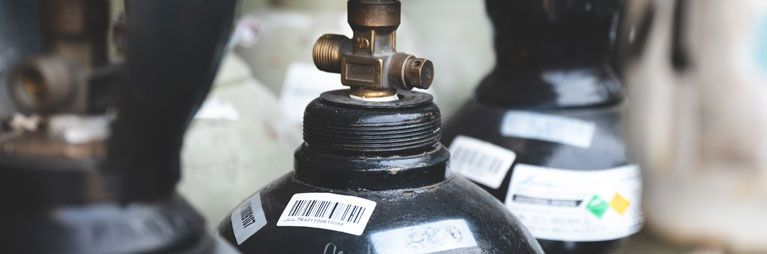
Choosing the right MIG welding gas is crucial for achieving high-quality welds and enhancing your welding process. Understanding the differences between shielding gases for MIG welding, such as an argon and CO2 mix, can significantly impact arc stability and weld penetration. For those working with aluminium, selecting the best gas for aluminium welding, like pure argon, ensures a cleaner weld. Meanwhile, a tri-mix gas for stainless steel can reduce spatter and improve performance.
As a welder or DIY enthusiast, learning about the properties of different welding gases will guide you in making informed decisions for your projects, resulting in strong and precise welds every time.
Selecting the Right MIG Welding Gas
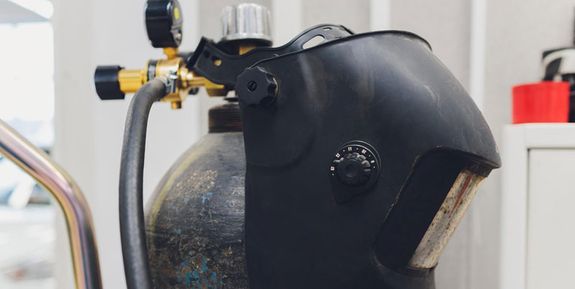
Choosing the correct gas for MIG welding is crucial for achieving optimal results. The right gas mixture can enhance weld quality, improve efficiency, and reduce post-weld cleanup.
Let's explore some common gas choices for different materials.
Argon and CO2 Mix Benefits
An argon and CO2 mix is a popular choice for MIG welding due to its versatility and effectiveness. This mixture combines the stability of argon with the penetration capabilities of CO2.
Argon, being inert, provides excellent arc stability and reduces spatter. CO2, on the other hand, enhances penetration and heat input. The typical mix ratio is 75% argon to 25% CO2, known as C25.
This combination works well for welding mild steel and low-alloy steels. It offers a good balance between weld quality and cost-effectiveness, making it a go-to choice for many welders.
Best Gas for Aluminium Welding
When it comes to aluminium welding, pure argon is often the best choice. Aluminium's properties require a different approach compared to steel welding.
Argon's inert nature prevents unwanted reactions with the aluminium, ensuring a clean weld. It also provides excellent arc stability, which is crucial when working with this lightweight metal.
For thicker aluminium, some welders might add a small percentage of helium to increase heat input and improve penetration. However, for most DIY and light industrial applications, pure argon remains the top choice.
Tri-Mix Gas for Stainless Steel
Stainless steel welding often benefits from a tri-mix gas, which typically includes argon, helium, and a small amount of CO2. This combination offers several advantages for this material.
The argon provides arc stability, while helium increases heat input for better penetration. The small addition of CO2 helps stabilise the arc further and improves weld pool fluidity.
A common tri-mix ratio is 90% helium, 7.5% argon, and 2.5% CO2. This mixture results in clean welds with minimal oxidation, crucial for maintaining the corrosion resistance of stainless steel.
Understanding Welding Gas Properties
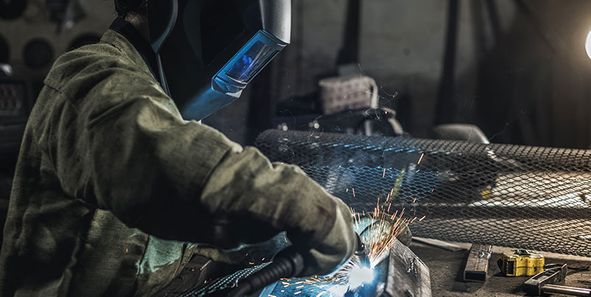
The properties of welding gases significantly impact the welding process and final results. Understanding these properties helps in selecting the right gas for specific applications.
Effects on Arc Stability
Arc stability is crucial for producing consistent, high-quality welds. The choice of welding gas plays a significant role in maintaining this stability.
Inert gases like argon provide excellent arc stability due to their low ionisation potential. This results in a smooth, spatter-free welding process.
CO2, being reactive, can cause more turbulence in the arc. While this increases penetration, it can also lead to more spatter. Balancing these properties through gas mixtures allows welders to achieve optimal results.
Impact on Weld Penetration
Weld penetration is another critical factor affected by gas choice. Different gases transfer heat to the weld pool in varying ways, influencing penetration depth.
CO2 provides deep penetration due to its high thermal conductivity. This makes it excellent for welding thicker materials but can lead to burn-through on thin sheets.
Argon, with its lower thermal conductivity, offers shallower penetration. This makes it suitable for thin materials and helps prevent burn-through.
Optimising Your Welding Process
Optimising your welding process involves more than just selecting the right gas. It requires a combination of proper techniques and understanding of material properties.
Techniques for High-Quality Welds
Achieving high-quality welds requires mastering several techniques and understanding how they interact with your chosen gas mixture.
-
Proper joint preparation: Clean the metal surfaces and ensure proper fit-up.
-
Correct wire feed speed: Adjust based on material thickness and gas mixture.
-
Optimal travel speed: Move at a steady pace that allows for proper fusion.
Maintaining the correct stick-out (the length of wire extending from the contact tip) is crucial. This varies depending on your gas mixture and affects heat input and arc stability.
Practice and experience will help you fine-tune these techniques for different materials and gas combinations.
Choosing Shielding Gases for MIG Welding
Selecting the right shielding gas for MIG welding depends on several factors, including the base metal, desired weld characteristics, and cost considerations.
For mild steel, an argon/CO2 mix offers a good balance of performance and cost. Pure argon works well for aluminium, while stainless steel often benefits from a tri-mix gas.
Consider these factors when choosing a shielding gas:
-
Base metal composition
-
Material thickness
-
Desired weld appearance
-
Required penetration depth
-
Cost constraints
Remember, the cheapest option isn't always the most cost-effective in the long run. Factor in productivity and post-weld cleanup when making your decision.
Ready to Get the Job Done right?
When you need the right gear, expert advice, and dependable support, trust the team at Alphaweld. Our specialists are here to help you find the perfect solution for your welding needs - no guesswork, no compromise.
Call us today on (08) 9456 8000 or email sales@alphaweld.com.au to speak with an expert.