

Shop Now
- Welding Consumables
- Welding Torches & Torch Spares
- Welding Machines
- Plasma & Cutting Machines
- Welding Machine Spare Parts & Accessories
- Welding Fume Extraction Equipment
- Gas Welding Equipment
- Welding Abrasives
-
Welding Safety Gear
- Welding Helmets
-
Welding Helmet Spares
- Speedglas Spares
- Betaweld Spares
- Cigweld Spare Parts & Accessories
- Flip Front Helmet Spares
- Jackson Spares & Accessories
- Lincoln Electric Spare Parts & Accessories
- Miller Spares & Accessories
- RPB Spares
- Servore Spares
- Unimig Spare Parts & Accessories
- Weldclass Spares & Accessories
- Miscellaneous Helmet Lens
- Welding Gloves
- Protective Workwear
- Welding Blankets
- Welding Screens & Curtains
- Ear Protection
- Eye Protection
- Face Protection
- Hand Protection
- Head Protection
- Respiratory Protection
- Sun Protection
- Hydration Products
- Fire Blankets
- Prestart Books
- Safety Signage
- Safety Tags
- Hazard Tape
- Welding Accessories
- Pipe Welding Equipment
-
Cutting & Drilling
- Bandsaws
- Bandsaw Blades
- Bandsaw Accessories
- Coldsaws
- Core Drills & Accessories
- Cutting & Milling Blades
- Diamond Blades
- Drill Bits
- Holesaws
- Magnetic Base Drills
- Metal Working Lubricants
- Pipe Bevelling
- Pipe Cutting Equipment
- Pipe Tee Pulling Kits
- Pipe Threading Machines
- Plasma Table Water Additives
- Punching Machines
- Welding Merchandise
- Gift Cards
- Clearances
-
Hire
- Hire Equipment
- Hire Heating Equipment
- Hire Degausing Equipment
- Hire Welding Automation
- Hire a Welding Positioner
- Hire a Turning Roller
- Hire a Diesel Welder
- Hire a Wirefeeder
- Hire a Multi-Process Welder
- Hire Accessories
- Hire a MIG Welder
- Hire a TIG Welder
- Hire a Stick Welder
- Hire a Plasma Cutter
- Hire a Weld Cleaner
- Hire a Stud Welder
New Workplace Exposure Limits for Tungsten Dust
What Welding Workplaces Need to Know Before 1 December 2026
From 1 December 2026, Australia will transition to new Workplace Exposure Limits (WEL) for airborne contaminants. The updated limits include ‘tungsten, metal and compounds (as W), making airborne tungsten dust from TIG electrode grinding a workplace exposure issue that requires attention before the deadline.
The risks of tungsten dust have always been there, but they are finally being formally recognised through Australia’s updated Workplace Exposure Limits. For workshops still sharpening tungsten electrodes on a bench grinder or angle grinder, the old way of doing the job now needs serious review.
Why Tungsten Dust Matters
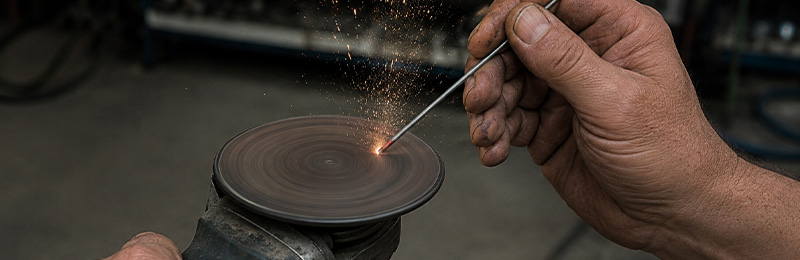
In many workshops tungsten electrode prep for TIG welding is still done on a makeshift, open wheel, holding the electrode against a bench or angle grinder to sharpen. While these methods may create a usable point, neither is particularly safe for the user or those around them.
When tungsten is ground on an abrasive wheel, fine residue can become airborne, settle across nearby surfaces, or enter the breathing zone of the person doing the grinding. Inhaled tungsten dust can affect the lungs and respiratory system, especially where exposure is repeated or poorly controlled.
The concern can be greater when thoriated tungsten electrodes are used, as grinding them can create fine particles of radioactive dust that can be even more harmful if inhaled or ingested.
In a busy workshop that same task can happen many times across a shift, so if airborne dust is not contained, the exposure risks accumulate every time an electrode is sharpened.
Control Tungsten Dust at the Source
The most practical place to control tungsten dust is where it is created.
A dedicated tungsten grinder changes the sharpening process entirely. Instead of holding the electrode against an exposed wheel, the grinder guides the electrode into a sealed grinding area. The grinding point is contained, and dust is captured inside the system instead of being released into the open workshop.
That is the source-control approach behind Inelco Grinders products. They were designed specifically around the issue that now matters most: harmful airborne tungsten dust produced during electrode sharpening.
Ultima-TIG: Bench-Mounted Tungsten Grinding
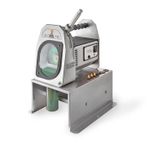
The Inelco Ultima-TIG tungsten grinder is suited to workplaces that sharpen electrodes at a fixed station, including fabrication workshops, production welding areas, maintenance teams, and TIG welding bays where tungsten preparation happens regularly.
Its sealed grinding chamber houses the diamond grinding disc. During sharpening, the electrode is inserted into the chamber, helping ensure tungsten dust particles are trapped inside rather than being released into the surrounding work area.
The Ultima-TIG also uses a wet grinding process. The grinding liquid captures tungsten dust and helps it settle into the dust collector. When the collector is full, it is removed and replaced so the captured residue can be disposed of safely and responsibly.
In addition, the Ultima-TIG provides safety benefits beyond dust control. It removes the need for the operator to hold the tungsten close to an exposed wheel, reducing the risk of hand or fingertip injuries. It also helps protect the operator from disc-related hazards, including potential eye injuries from fragments if a disc were to fail.
Neutrix: Portable Tungsten Grinding
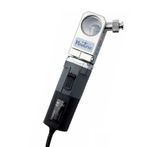
The Inelco Neutrix portable tungsten grinder is suited to workplaces that need a controlled grinding option across multiple bays, on-site, or in lower-volume TIG welding environments where a fixed grinding station is not practical or required.
It provides an enclosed grinding chamber and integrated dust filter, giving workers a portable alternative to the angle grinder. It does not use grinding liquid like the Ultima-TIG, but it still contains the grinding process and captures dust using a filter cassette – unlike other portable competitors.
For on-site or lower-volume TIG welders, the Neutrix can be a more cost-effective way to move away from open grinding while still providing a safer method of sharpening tungsten.
Don’t Wait Until the Deadline
With tungsten now included in Australia’s new Workplace Exposure Limits, workplaces have a clear reason to review how their electrodes are being sharpened before 1 December 2026.
If that process still involves a bench grinder or angle grinder, it is time to make a change.
For fixed workshop grinding, choose the Ultima-TIG. For portable work, lower-volume TIG welding, or jobs spread across multiple locations, choose the Neutrix. Some workplaces may benefit from having both.
Adapting to new processes takes time, so don’t wait until the deadline arrives. If your tungsten electrodes are still being sharpened in the open, choose the Inelco Grinders solution that fits the workplace now and give the team a safer, controlled process well before the new WEL limits take effect.
Republished with permission from Welding Automation. Link to original article.