

Shop Now
-
Welding Consumables
-
MIG Welding Wires
- Mild Steel MIG Wires
- Stainless Steel MIG Wires
- Duplex & Super Duplex MIG Wires
- Low Alloy MIG Welding Wires
- Flux Cored MIG Wires
- Flux Cored Seamless MIG Wires
- Flux Cored Self Shielded MIG Wires
- Flux Cored Stainless Steel Wires
- Flux Cored Duplex MIG Wires
- Aluminium MIG Wires
- Metal Cored MIG Wire
- Metal Cored Seamless MIG Wires
- Bronze MIG Wires
- TIG Welding Rods
- Welding Electrodes
- Gouging Carbons
- Hardfacing Wires
- Sub Arc Wires
- Sub Arc Flux
- Brazing Rods
- Brazing Fluxes
- Soldering Products
-
MIG Welding Wires
- Welding Torches and Torch Spares
-
Welding Machines
- MIG Welding Machines
- TIG Welding Machines
- STICK Welders
- Multi-Process Welders
- Battery Welders
- Laser Welders
- Laser Cleaners
- Wire Feeders
- Sub Arc Welding Machines
- Stud Welding Machines
- Engine Driven Welding Machines
- Weld Cleaning Machines
- Welding Automation Machines
- Heating Equipment
- Tungsten Grinders
- Tungsten Feeders
- Plasma & Cutting Machines
-
Welding Machine Spare Parts
- Welding Trolleys
- Alfra Spare Parts
- Betaweld Spare Parts
- Bug-O Spare Parts
- Cougartron Spare Parts
- Excision Spare Parts
- Fronius Spare Parts
- Geiger Spare Parts
- Hypertherm Spare Parts
- Kemppi Spare Parts
- Koike Spare Parts
- Lincoln Electric Spare Parts
- Miller Spare Parts
- Neutrix Spare Parts
- Rex Spare Parts
- Taylor Spare Parts
- Unimig Spare Parts
- Von Arx Spare Parts
- Weldmax Spare Parts
- Welding Fume Extraction Equipment
- Gas Welding Equipment
- Welding Abrasives
-
Welding Safety Gear
- Welding Helmets
-
Welding Helmet Spares
- Speedglas Welding Helmet Spares
- 3M Spares
- Betaweld Welding Helmet Spares
- Cigweld Welding Helmet Spares
- Flip Front Helmet Spares
- Jackson Welding Helmet Spares
- Lincoln Welding Helmet Spares
- Miller Welding Helmet Spares
- RPB Welding Helmet Spares
- Servore Welding Helmet Spares
- Unimig Welding Helmet Spares
- Weldclass Welding Helmet Spares
- Miscellaneous Helmet Lens
- Welding Gloves
- Protective Workwear
- Welding Blankets
- Welding Screens and Curtains
- Ear Protection
- Eye Protection
- Face Shields
- Hand Protection
- Head Protection
- Welding Respiratory Gear
- Sun Protection
- Hydration Products
- Fire Blankets
- Prestart Books
- Welding Safety Signages
- Safety Tags
- Hazard Tapes
-
Welding Accessories
- Air Tools
- Power Tools
- Welding Aids
- Welding Tables
- Welding Cables
- Welding Leads
- Electrical Power Supplies
- Welding Clamps
- Clamp Accessories
- Earth Clamps
- Welding Cleaning Equipment
- Welding Chemicals
- Arcair Gouging
- Lifting Accessories
- Hammers
- Manual Arc Accessories
- Weld Measuring
- Weld Testing Products
- Wire Brushes
- Pipe Welding Equipment
-
Cutting & Drilling
- Bandsaws
- Bandsaw Blades
- Bandsaw Accessories
- Cold Saws
- Core Drills
- Cutting Blades
- Diamond Blades
- Drill Bits
- Holesaws
- Magnetic Base Drills
- Metal Working Lubricants
- Pipe Bevelling Machines
- Pipe Cutting Equipment
- Tee Pulling Kits
- Pipe Threading Machines
- Plasma Table Water Additives
- Hydraulic Punching Machines
- Welding Merchandise
- Gift Cards
- Welding Clearances
-
Welding Equipment Hire
- Hire Equipment
- Hire Heating Equipment
- Hire Degausing Equipment
- Hire Welding Automation
- Hire a Welding Positioner
- Hire a Turning Roll
- Hire a Diesel Welder
- Hire a Wirefeeder
- Hire a Multi-Process Welder
- Hire Welding Accessories
- Hire a MIG Welder
- Hire a TIG Welder
- Hire a Stick Welder
- Hire a Plasma Cutter
- Hire a Weld Cleaner
- Hire a Stud Welder
What is GMAW Welding: Techniques and Applications
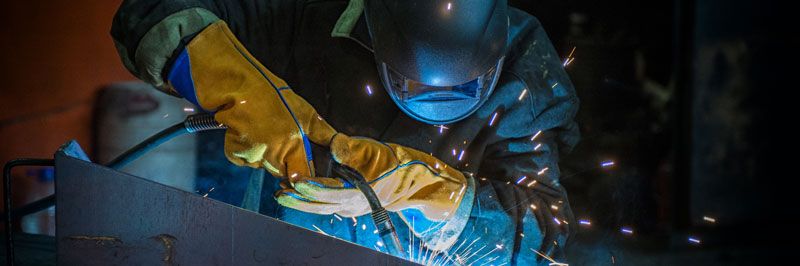
Most welders underestimate how much Gas Metal Arc Welding (GMAW) can boost their work. You might think GMAW welding is just another routine method, but it stands apart with unique advantages and wide applications. Keep reading to discover how simple welding techniques open up new possibilities for your projects and skills.
What GMAW Welding Really Means
GMAW welding, also known as MIG welding, uses a continuous wire electrode fed through a welding gun. The process shields the weld pool with an inert or semi-inert gas mixture. This method delivers clean, strong welds across multiple metal types. You can achieve consistent results when you master the fundamentals.
Gas Metal Arc Welding works by creating an electric arc between the wire and your base metal. The heat melts both materials, forming a solid joint as they cool. The shielding gas protects the molten metal from atmospheric contamination. This protection gives you cleaner welds with less spatter and fewer defects.
Core Welding Techniques You Need to Master
Setting Up Your Equipment Properly
Start with the right wire size for your material thickness. Match your shielding gas to the metal you're joining. Steel requires different gas mixtures than aluminium or stainless steel. Set your voltage and wire feed speed according to manufacturer specifications. These settings determine your penetration depth and bead appearance.
Controlling Your Gun Angle and Travel Speed
Hold your gun at a 10 to 15-degree push or drag angle. The push technique works best for thinner materials, whilst dragging suits thicker sections. Keep your travel speed steady to maintain uniform bead width. Moving too fast creates weak welds with poor penetration. Going too slow causes excessive heat buildup and warping.
Managing Heat Input
Control your heat by adjusting voltage, amperage, and travel speed. Too much heat burns through thin materials and distorts your workpiece. Insufficient heat produces cold laps and incomplete fusion. Watch your weld pool size and adjust accordingly. The pool should flow smoothly without excessive rippling or sagging.
Advantages of GMAW
GMAW welding delivers faster deposition rates than STICK welding or TIG processes. You'll complete jobs quicker whilst maintaining quality standards. The continuous wire feed means fewer stops to change electrodes. This continuity keeps you productive throughout your shift.
The process produces minimal slag and spatter compared to other welding techniques. You spend less time cleaning and more time welding. The clean welds reduce post-weld grinding and finishing work. Your completed projects look professional straight off the gun.
Gas Metal Arc Welding works on materials from 0.5mm to 25mm thick. You can weld steel, stainless steel, aluminium, and other alloys with the same basic equipment. Just change your wire type and shielding gas mixture. This versatility makes GMAW the workhorse of fabrication shops.
The learning curve for GMAW is gentler than other processes. Beginners pick up basic skills faster than with STICK or TIG welding. You'll produce acceptable welds within days of practice. Mastering the finer points takes time, but the fundamentals come quickly.
Welding Applications Across Industries
Automotive and Transport Manufacturing
GMAW dominates automotive production lines. The process welds body panels, frames, and structural components rapidly. Manufacturers choose it for consistent quality and high production speeds. Repair shops rely on GMAW for collision repairs and custom fabrication work.
Structural Steel and Construction
Builders use Gas Metal Arc Welding for structural steel assembly. The process handles I-beams, columns, and trusses with ease. Construction sites favour GMAW for its portability and reliability. You can set up equipment quickly and start welding in various positions.
General Fabrication and Repair
Fabrication shops depend on GMAW for custom metalwork. From gates and railings to industrial equipment, the applications are endless. Maintenance teams use it for equipment repairs and modifications. The process adapts to both production runs and one-off jobs.
Aerospace and Precision Work
Aerospace manufacturers use controlled GMAW for critical components. The process delivers repeatable results with proper setup and operator skill. Thin-wall tubing and precision assemblies benefit from the controlled heat input. Quality control standards in this sector demand the consistency GMAW provides.
Get Started with GMAW Today
GMAW welding gives you the speed, quality, and versatility modern work demands. Invest in quality equipment and proper training. Your skills will improve with every bead you lay. The advantages of GMAW become clear once you put the gun in your hand and strike that first arc. Master these welding techniques and watch your capabilities expand across multiple welding applications.
If you need help getting started or guidance on the best gear for GMAW welding, Alphaweld is here for you. To speak with our team of experts, give us a call today on (08) 9456 8000 or contact us online.
Frequently Asked Questions
What is GMAW welding used for?
GMAW welding is used for automotive manufacturing, structural steel construction, general fabrication, and repair work. The process handles materials from thin sheet metal to thick structural sections. It works on steel, stainless steel, aluminium, and various alloys, making it the most common welding method in modern fabrication shops.
What are the main advantages of GMAW over other welding processes?
GMAW offers faster deposition rates, minimal slag cleanup, and continuous wire feed that eliminates electrode changes. The process produces cleaner welds with less spatter than STICK welding and has a shorter learning curve than TIG welding. You can weld a wide range of metal thicknesses and types with the same basic equipment by changing wire and gas combinations.
What shielding gases are used in Gas Metal Arc Welding?
Steel welding typically uses mixtures of argon and carbon dioxide or pure CO2. Stainless steel requires argon with small percentages of oxygen or CO2. Aluminium needs pure argon or argon-helium blends. The gas choice affects arc stability, penetration depth, and weld appearance.
How thick of metal can you weld with GMAW?
GMAW welding handles material thicknesses from 0.5mm up to 25mm in a single pass. Thicker sections require multiple passes with proper joint preparation. Thinner materials need careful heat control to prevent burn-through, whilst thicker sections may require preheating for proper fusion.
Is GMAW welding difficult to learn?
GMAW welding has the gentlest learning curve among major welding processes. Beginners typically produce acceptable welds within days of practice, compared to weeks or months for TIG welding. The continuous wire feed and stable arc make it easier to maintain consistent technique, though mastering advanced applications still requires dedicated practice and proper instruction.