

Shop Now
- Welding Consumables
- Welding Torches & Torch Spares
- Welding Machines
- Plasma & Cutting Machines
- Welding Machine Spare Parts & Accessories
- Welding Fume Extraction Equipment
- Gas Welding Equipment
- Welding Abrasives
-
Welding Safety Gear
- Welding Helmets
-
Welding Helmet Spares
- Speedglas Spares
- Betaweld Spares
- Cigweld Spare Parts & Accessories
- Flip Front Helmet Spares
- Jackson Spares & Accessories
- Lincoln Electric Spare Parts & Accessories
- Miller Spares & Accessories
- RPB Spares
- Servore Spares
- Unimig Spare Parts & Accessories
- Weldclass Spares & Accessories
- Miscellaneous Helmet Lens
- Welding Gloves
- Protective Workwear
- Welding Blankets
- Welding Screens & Curtains
- Ear Protection
- Eye Protection
- Face Protection
- Hand Protection
- Head Protection
- Respiratory Protection
- Sun Protection
- Hydration Products
- Fire Blankets
- Prestart Books
- Safety Signage
- Safety Tags
- Hazard Tape
- Welding Accessories
- Pipe Welding Equipment
-
Cutting & Drilling
- Bandsaws
- Bandsaw Blades
- Bandsaw Accessories
- Coldsaws
- Core Drills & Accessories
- Cutting & Milling Blades
- Diamond Blades
- Drill Bits
- Holesaws
- Magnetic Base Drills
- Metal Working Lubricants
- Pipe Bevelling
- Pipe Cutting Equipment
- Pipe Tee Pulling Kits
- Pipe Threading Machines
- Plasma Table Water Additives
- Punching Machines
- Welding Merchandise
- Gift Cards
- Clearances
-
Hire
- Hire Equipment
- Hire Heating Equipment
- Hire Degausing Equipment
- Hire Welding Automation
- Hire a Welding Positioner
- Hire a Turning Roller
- Hire a Diesel Welder
- Hire a Wirefeeder
- Hire a Multi-Process Welder
- Hire Accessories
- Hire a MIG Welder
- Hire a TIG Welder
- Hire a Stick Welder
- Hire a Plasma Cutter
- Hire a Weld Cleaner
- Hire a Stud Welder
What is Laser Welding and How Does it Work?
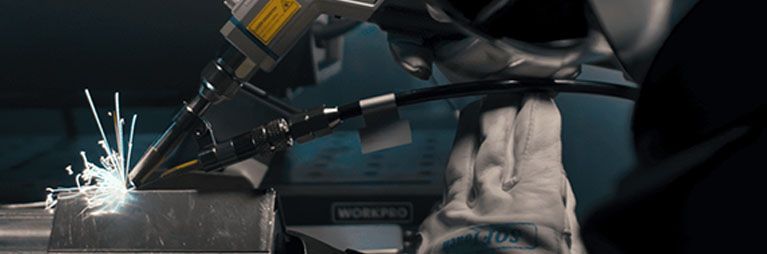
Laser welding is changing how materials are joined in manufacturing, offering unmatched precision and speed. If you're looking to improve your production line, understanding how laser welding works can give you an edge.
This blog breaks down the advantages of laser welding, the types of lasers involved, and the materials best suited for this process, helping you make smarter choices for your projects. Learn more about laser welding equipment and solutions.
Understanding How Laser Welding Works
Laser welding delivers a concentrated beam of light energy directly to the workpiece. The focused beam generates intense heat that melts the base materials, creating a fusion zone. As the laser moves along the joint, the molten metal solidifies behind it, forming a strong, permanent bond.
The process requires three key components: a laser source, a delivery system, and proper fixturing. The laser source generates the beam. The delivery system directs and focuses that beam onto the exact location you need. Your fixturing holds parts in precise alignment during welding.
How laser welding works depends on whether you choose conduction mode or keyhole mode. Conduction mode creates shallow, wide welds suitable for thin materials. Keyhole mode penetrates deeper, producing narrow, strong welds perfect for thick sections.
Advantages of Laser Welding Over Traditional Methods
The advantages of laser welding make it superior to conventional techniques in many applications. First, you get exceptional precision. The focused beam creates narrow heat-affected zones, minimising distortion and maintaining material properties around the weld.
Speed ranks as another major benefit. Laser welding completes joints faster than MIG, TIG, or resistance welding. This translates directly to higher production rates and lower labour costs.
You also gain access to difficult joints. Laser welding reaches tight spaces and complex geometries that other methods cannot handle. The non-contact process eliminates electrode wear and reduces consumable costs.
Automation integrates easily with laser systems. You can program exact parameters and achieve repeatable results across thousands of parts. This consistency ensures quality control and reduces scrap rates.
Types of Lasers Used in Welding Applications
Understanding the types of lasers available helps you select the right equipment for your needs. Fiber lasers dominate modern manufacturing. They produce high beam quality, operate with minimal maintenance, and deliver excellent energy conversion rates.
CO2 lasers remain popular for specific laser welding applications. These systems excel at welding reflective materials and thicker sections. They offer deep penetration and stable arc characteristics.
Nd:YAG lasers provide versatility for both welding and cutting operations. Their wavelength works well with many metals, and they can be delivered through flexible fiber optics for robotic applications.
Diode lasers offer compact size and lower initial costs. They suit smaller production runs and repair work where portability matters.
Laser Welding Applications Across Industries
Laser welding applications span multiple sectors. The automotive industry relies heavily on laser welding for body assembly, battery packs in electric vehicles, and transmission components. The precision reduces weight while maintaining structural integrity.
Aerospace manufacturers trust laser welding for critical components where strength-to-weight ratios matter most. Turbine blades, fuel systems, and airframe structures all benefit from this joining method.
Medical device production demands the cleanliness and precision that laser welding provides. Surgical instruments, implants, and diagnostic equipment require welds free from contamination and distortion.
Electronics manufacturing uses laser welding for battery connections, sensor housings, and hermetic seals. The controlled heat input protects sensitive components.
Safety in Laser Welding Operations
Safety in laser welding must be your top priority. Laser radiation poses serious risks to eyes and skin. Install proper enclosures around your welding area. Use interlocked safety doors that shut down the laser when opened.
Provide appropriate protective eyewear rated for your laser's wavelength. Standard welding helmets do not protect against laser radiation. Train all operators on laser safety procedures before allowing them near the equipment.
Control fume extraction at the source. Laser welding generates metal vapors and particulates that require proper ventilation. Install local exhaust systems and maintain them regularly.
Establish a laser safety officer role within your facility. This person oversees compliance with safety standards and conducts regular audits of your laser operations.
Latest Advancements in Laser Technology
The latest advancements in laser technology continue to expand capabilities. Blue laser systems now weld copper and other reflective materials more effectively than traditional wavelengths. This opens new possibilities for electric vehicle battery production.
Wobble welding techniques oscillate the laser beam in controlled patterns. This increases the weld width and improves gap bridging, making the process more forgiving of fit-up tolerances.
Real-time monitoring systems track weld quality during production. Sensors detect defects immediately, allowing you to make corrections before producing scrap parts.
Higher power lasers push into thicker materials previously requiring multi-pass welds. Single-pass full-penetration welds reduce cycle times and improve joint quality.
Remote welding heads scan the beam across large areas without moving the workpiece. This speeds up production of complex assemblies with multiple weld locations.
Hybrid systems combine laser welding with arc welding processes. You get the speed of laser welding with the gap tolerance of traditional methods.
Harness the Power of Laser Welding
Invest in laser welding technology now to stay competitive. The return on investment comes through faster production, better quality, and reduced operating costs. Your manufacturing operation deserves the best tools available.
Ready to up your welding game? The experts at Alphaweld are always ready to help - reach out for trusted advice and support by calling us on (08) 9456 8000 or email sales@alphaweld.com.au.