

Shop Now
- Welding Consumables
- Welding Torches & Torch Spares
- Welding Machines
- Plasma & Cutting Machines
- Welding Machine Spare Parts & Accessories
- Welding Fume Extraction Equipment
- Gas Welding Equipment
- Welding Abrasives
-
Welding Safety Gear
- Welding Helmets
-
Welding Helmet Spares
- Speedglas Spares
- Betaweld Spares
- Cigweld Spare Parts & Accessories
- Flip Front Helmet Spares
- Jackson Spares & Accessories
- Lincoln Electric Spare Parts & Accessories
- Miller Spares & Accessories
- RPB Spares
- Servore Spares
- Unimig Spare Parts & Accessories
- Weldclass Spares & Accessories
- Miscellaneous Helmet Lens
- Welding Gloves
- Protective Workwear
- Welding Blankets
- Welding Screens & Curtains
- Ear Protection
- Eye Protection
- Face Protection
- Hand Protection
- Head Protection
- Respiratory Protection
- Sun Protection
- Hydration Products
- Fire Blankets
- Prestart Books
- Safety Signage
- Safety Tags
- Hazard Tape
- Welding Accessories
- Pipe Welding Equipment
-
Cutting & Drilling
- Bandsaws
- Bandsaw Blades
- Bandsaw Accessories
- Coldsaws
- Core Drills & Accessories
- Cutting & Milling Blades
- Diamond Blades
- Drill Bits
- Holesaws
- Magnetic Base Drills
- Metal Working Lubricants
- Pipe Bevelling
- Pipe Cutting Equipment
- Pipe Tee Pulling Kits
- Pipe Threading Machines
- Plasma Table Water Additives
- Punching Machines
- Welding Merchandise
- Gift Cards
- Clearances
-
Hire
- Hire Equipment
- Hire Heating Equipment
- Hire Degausing Equipment
- Hire Welding Automation
- Hire a Welding Positioner
- Hire a Turning Roller
- Hire a Diesel Welder
- Hire a Wirefeeder
- Hire a Multi-Process Welder
- Hire Accessories
- Hire a MIG Welder
- Hire a TIG Welder
- Hire a Stick Welder
- Hire a Plasma Cutter
- Hire a Weld Cleaner
- Hire a Stud Welder
Metal Passivation Explained: What it Is & How it Works
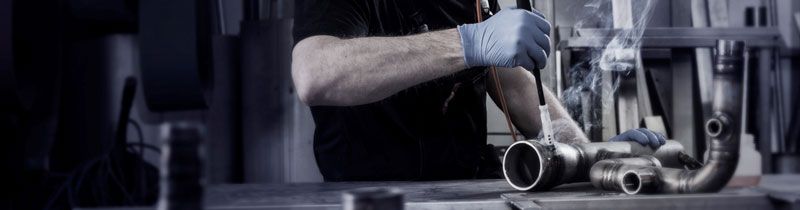
When stainless steel is welded, the intense heat generated during the process creates visible discolouration known as heat tint. While many welders view this as simply a cosmetic issue, the reality is that heat tint can significantly reduce the corrosion resistance of stainless steel if left untreated. This is where metal passivation becomes essential.
Passivation is the process of restoring and strengthening the protective oxide layer on stainless steel after fabrication, helping to maximise corrosion resistance, improve appearance, and extend service life. Modern electrochemical weld cleaning systems now allow welders to clean and passivate stainless steel in a single operation, making the process faster, safer and more effective than traditional methods.
What is Metal Passivation?
Stainless steel naturally forms a thin chromium-rich oxide layer on its surface. This invisible barrier protects the metal from rust, staining and corrosion.
However, welding, grinding, cutting and fabrication processes can damage this protective layer and introduce contaminants such as free iron particles. Without treatment, these affected areas can become susceptible to corrosion over time.
Passivation removes contaminants and promotes the rapid formation of a clean, uniform protective oxide layer, restoring the corrosion resistance that stainless steel is known for.
Why is Passivation Important After Welding?
During TIG and MIG welding, heat tint and oxides form around the weld zone. These oxide layers can reduce the chromium content at the surface, making the material less resistant to corrosion.
Proper post-weld treatment delivers several benefits:
- Restores corrosion resistance
- Removes heat tint and weld discolouration
- Improves weld appearance
- Reduces the risk of rust and contamination
- Helps meet hygiene requirements in food, beverage and pharmaceutical applications
- Minimises costly rework and maintenance
For industries where stainless steel performance matters, passivation should be considered a critical final step rather than an optional extra.
Traditional Methods vs Electrochemical Passivation
Historically, fabricators relied on pickling pastes, acids, grinding discs and abrasives to remove heat tint.
While effective, these methods can present challenges:
- Hazardous chemicals
- Time-consuming application and clean-up
- Additional labour costs
- Potential surface damage from grinding
- Increased waste disposal requirements
Today, electrochemical weld cleaning technology offers a safer and more efficient alternative. Instead of aggressively removing material, the process uses an electrolyte solution and electrical current to clean, passivate and restore the stainless steel surface.
How Electrochemical Passivation Works
Electrochemical weld cleaning combines a conductive cleaning fluid with controlled electrical current.
As the operator passes the cleaning brush over the weld area:
- Heat tint and oxides are removed.
- Surface contaminants are eliminated.
- The protective chromium-rich oxide layer is restored.
- The weld achieves a clean, uniform finish.
The result is a faster, cleaner and more professional outcome compared with many traditional post-weld cleaning methods.
Introducing the Betaweld PASIV8 Weld Cleaner
For workshops looking to streamline stainless steel finishing, the Betaweld PASIV8 Weld Cleaner provides an all-in-one solution for weld cleaning, passivation and surface restoration.
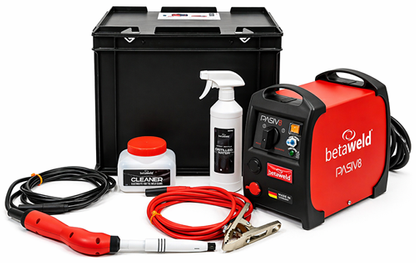
Designed specifically for stainless steel fabrication environments, the PASIV8 system helps operators:
- Remove heat tint quickly
- Restore corrosion resistance
- Improve weld appearance
- Reduce reliance on hazardous pickling chemicals
- Increase productivity across stainless steel projects
Whether you're fabricating balustrades, food-grade equipment, architectural stainless steel or industrial pipework, the PASIV8 helps deliver professional results with minimal effort.
Applications for Passivated Stainless Steel
Passivation is commonly used across industries where corrosion resistance and appearance are critical, including:
- Food and beverage manufacturing
- Pharmaceutical equipment
- Marine applications
- Architectural stainless steel
- Commercial kitchens
- Mining and processing plants
- Water treatment infrastructure
In these environments, properly passivated welds can significantly improve long-term performance and reduce maintenance requirements.
Taking Action
Metal passivation is one of the most important finishing processes for stainless steel fabrication. By restoring the protective oxide layer after welding, passivation helps maximise corrosion resistance, improve appearance and extend the life of fabricated components.
For workshops seeking a faster, safer and more efficient alternative to traditional pickling methods, the Betaweld PASIV8 Weld Cleaner offers professional-grade electrochemical cleaning and passivation technology in one easy-to-use system.
Ready to improve your stainless steel finishing process? Explore the Betaweld PASIV8 Weld Cleaner today and discover the advantages of modern electrochemical passivation.