

Shop Now
-
Welding Consumables
-
MIG Welding Wires
- Mild Steel MIG Wires
- Stainless Steel MIG Wires
- Duplex & Super Duplex MIG Wires
- Low Alloy MIG Welding Wires
- Flux Cored MIG Wires
- Flux Cored Seamless MIG Wires
- Flux Cored Self Shielded MIG Wires
- Flux Cored Stainless Steel Wires
- Flux Cored Duplex MIG Wires
- Aluminium MIG Wires
- Metal Cored MIG Wire
- Metal Cored Seamless MIG Wires
- Bronze MIG Wires
- TIG Welding Rods
- Welding Electrodes
- Gouging Carbons
- Hardfacing Wires
- Sub Arc Wires
- Sub Arc Flux
- Brazing Rods
- Brazing Fluxes
- Soldering Products
-
MIG Welding Wires
- Welding Torches and Torch Spares
-
Welding Machines
- Machine Bundles
- MIG Welding Machines
- TIG Welding Machines
- STICK Welders
- Multi-Process Welders
- Battery Welders
- Laser Welders
- Laser Cleaners
- Wire Feeders
- Sub Arc Welding Machines
- Stud Welding Machines
- Engine Driven Welding Machines
- Weld Cleaning Machines
- Welding Automation Machines
- Heating Equipment
- Tungsten Grinders
- Tungsten Feeders
- Plasma & Cutting Machines
-
Welding Machine Spare Parts
- Welding Trolleys
- Alfra Spare Parts
- Betaweld Spare Parts
- Bug-O Spare Parts
- Cougartron Spare Parts
- Excision Spare Parts
- Fronius Spare Parts
- Geiger Spare Parts
- Hypertherm Spare Parts
- Kemppi Spare Parts
- Koike Spare Parts
- Lincoln Electric Spare Parts
- Miller Spare Parts
- Neutrix Spare Parts
- Rex Spare Parts
- Taylor Spare Parts
- Unimig Spare Parts
- Von Arx Spare Parts
- Weldmax Spare Parts
- Welding Fume Extraction Equipment
- Gas Welding Equipment
- Welding Abrasives
-
Welding Safety Gear
- Welding Helmets
-
Welding Helmet Spares
- Speedglas Welding Helmet Spares
- 3M Spares
- Betaweld Welding Helmet Spares
- Cigweld Welding Helmet Spares
- Flip Front Helmet Spares
- Jackson Welding Helmet Spares
- Lincoln Welding Helmet Spares
- Miller Welding Helmet Spares
- RPB Welding Helmet Spares
- Servore Welding Helmet Spares
- Unimig Welding Helmet Spares
- Weldclass Welding Helmet Spares
- Miscellaneous Helmet Lens
- Welding Gloves
- Protective Workwear
- Welding Blankets
- Welding Screens and Curtains
- Ear Protection
- Eye Protection
- Face Shields
- Hand Protection
- Head Protection
- Welding Respiratory Gear
- Sun Protection
- Hydration Products
- Fire Blankets
- Prestart Books
- Welding Safety Signages
- Safety Tags
- Hazard Tapes
-
Welding Accessories
- Air Tools
- Power Tools
- Welding Aids
- Welding Tables
- Welding Cables
- Welding Leads
- Electrical Power Supplies
- Welding Clamps
- Clamp Accessories
- Earth Clamps
- Welding Cleaning Equipment
- Welding Chemicals
- Arcair Gouging
- Lifting Accessories
- Hammers
- Manual Arc Accessories
- Weld Measuring
- Weld Testing Products
- Wire Brushes
- Pipe Welding Equipment
-
Cutting & Drilling
- Bandsaws
- Bandsaw Blades
- Bandsaw Accessories
- Cold Saws
- Core Drills
- Cutting Blades
- Diamond Blades
- Drill Bits
- Holesaws
- Magnetic Base Drills
- Metal Working Lubricants
- Pipe Bevelling Machines
- Pipe Cutting Equipment
- Tee Pulling Kits
- Pipe Threading Machines
- Plasma Table Water Additives
- Hydraulic Punching Machines
- Welding Merchandise
- Gift Cards
- Welding Clearances
-
Welding Equipment Hire
- Hire Equipment
- Hire Heating Equipment
- Hire Degausing Equipment
- Hire Welding Automation
- Hire a Welding Positioner
- Hire a Turning Roll
- Hire a Diesel Welder
- Hire a Wirefeeder
- Hire a Multi-Process Welder
- Hire Welding Accessories
- Hire a MIG Welder
- Hire a TIG Welder
- Hire a Stick Welder
- Hire a Plasma Cutter
- Hire a Weld Cleaner
- Hire a Stud Welder
How to Weld Aluminium: A Complete Beginner’s Guide
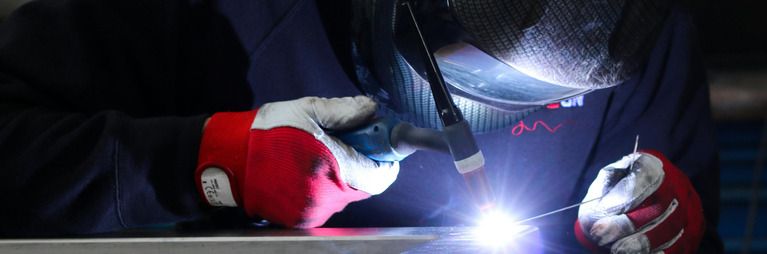
To weld aluminium, you must thoroughly clean the metal and filler material, using a process like TIG or MIG welding (often requiring a DC setup for MIG or AC for TIG), and maintain proper technique by using a push angle, managing the intense heat with a heat sink - while carefully controlling the weld puddle with appropriate amperage and gas flow. For TIG welding, a push angle is used for the torch, while for MIG, a push angle is used for the wire feed.
Welding aluminium can be a challenging but rewarding skill to learn. Due to its lightweight nature, corrosion resistance, and strength, aluminium is widely used in industries such as automotive, aerospace, and construction. However, welding aluminium requires different techniques compared to steel or other metals. In this beginners guide, we’ll cover the basics to help get you started.
Understanding Aluminium’s Properties
Before welding aluminium, it's crucial to understand its unique characteristics. Aluminium has high thermal conductivity, which means it conducts heat quickly and requires higher welding currents and precise heat control. Additionally, aluminium forms an oxide layer that melts at a much higher temperature than the base metal, which needs to be removed before welding. Aluminium has a lower melting point than steel, making it susceptible to burn-through if not handled correctly.
Choosing the Right Welding Process
There are several welding techniques, but the most common for aluminium are TIG (GTAW) welding, MIG (GMAW) welding, and STICK welding (SMAW). TIG welding is ideal for thin aluminium and high-precision work, requiring a tungsten electrode and pure argon gas. MIG welding is more suitable for thicker aluminium and uses a spool gun or push-pull system to feed aluminium wire efficiently. STICK welding, while less common for aluminium, is possible with special electrodes.
Essential Equipment & Safety
Equipment
A welding machine with AC capabilities is essential for TIG welding, while MIG welding requires the right settings. Pure argon is typically used as shielding gas, although helium can be added for deeper penetration. Choosing the right aluminium alloy filler wire, such as ER4045 or ER5356, is also important for ensuring strong welds.
Safety Precautions
Welders should always wear a welding helmet with proper shade protection, heat-resistant gloves, and a flame-resistant jacket. Ensuring proper ventilation is crucial to prevent exposure to harmful fumes that may arise during welding.
Preparing Aluminium for Welding
Proper preparation is key to successful aluminium welding. The surface should be cleaned using a stainless steel brush or acetone to remove oxidation and contaminants. Preheating the material up to 93°C can help reduce thermal shock and prevent cracking. Additionally, choosing the right joint design, such as butt joints, fillet joints, or lap joints, ensures optimal fusion.
Welding Techniques & Best Practices
Setting Up Your Machine
Adjusting the voltage, amperage, and wire feed speed based on material thickness is essential for achieving quality welds. When using TIG welding, AC current helps remove oxidation effectively. Learn more from our blog on MIG Welding: How to Correctly Set Your Machine Parameters.
Technique Tips
Maintaining a steady travel speed prevents overheating, while holding a consistent torch angle of about 10-15 degrees ensures better control over the weld. Excessive heat input should be avoided to prevent burn-through and warping of the material.
Post-Weld Considerations
After welding, it is important to clean the weld by removing residual oxides using a brush or chemical cleaner. Inspecting for defects such as porosity, cracks, or undercutting ensures the integrity of the weld. If needed, strength testing, including bend or stress tests, can be performed to confirm the durability of the weld.
Common Mistakes & How to Avoid Them
One common mistake is skipping pre-cleaning, which can result in weak welds due to the presence of oxides. Incorrect heat control is another issue - too much heat can cause burn-through, while too little results in poor fusion. Additionally, using the wrong filler material can lead to weak or brittle welds, so it is important to choose the right filler wire for the specific aluminium alloy being welded.
Contact the Experts
Welding aluminium takes practice, patience, and the right approach. By mastering aluminium welding, you open up new possibilities for fabrication and repair work, whether as a hobbyist or a professional welder!
If you need help getting started or guidance on the best gear for aluminium welding, Alphaweld is here for you. To speak with our team of experts, give us a call today on (08) 9456 8000 or contact us online.